
As a clinical psychologist and family therapist, I am often invited into the lived realities of families navigating complex and demanding circumstances. In recent years, I have worked with a number of parents whose work requires them to be away from their children for extended periods—sometimes days, weeks, or even months—due to employment demands, financial responsibilities, or migration-related work arrangements.
This blog was inspired by these families.
What stands out consistently is not a lack of love or commitment, but the emotional challenge of maintaining connection across distance, and the quiet question many parents carry:
How do we stay emotionally close when we are physically apart?
Family systems theory and attachment research offer important insight here. They remind us that children do not only need physical presence—they need emotional availability, predictability, and relational continuity.

Understanding connection through a family systems lens
From a family systems perspective, the family operates as an interconnected emotional unit. When one parent is physically absent, the system reorganises itself emotionally and practically.
Children are especially sensitive to changes in availability. Attachment research shows that secure attachment develops through consistent and responsive caregiving over time, but importantly, consistency is not defined only by physical presence. It is also defined by emotional reliability and predictability.
Children can maintain a secure sense of connection with an absent parent when they experience:
- regular and meaningful communication
- emotional warmth and attunement
- clear explanations about the separation
- stable caregiving routines at home
The goal is not to eliminate the impact of distance, but to ensure that the relationship remains emotionally safe and continuous.

The emotional experience of separation
Parental absence can activate different emotional responses in children depending on age and temperament. Some children may become withdrawn, others more clingy or irritable, and others may show behavioural changes. From a systemic perspective, these behaviours are not simply “problems,” but expressions of emotional distress within the relational system
At the same time, both parents often carry emotional strain:
- The parent away may experience guilt, longing, and helplessness
- The parent at home may experience exhaustion, overload, or emotional isolation
These reactions are not signs of dysfunction—they are signs of a system adapting under stress.
The key clinical question becomes:
How can connection be intentionally maintained in ways that support the child’s emotional security?
Practical ways to maintain connection
For the parent who is away
Even at a distance, you remain an emotionally central figure in your child’s life.
– Prioritise predictable contact
Children feel safer when contact is consistent and expected rather than sporadic. Regular routines (e.g., bedtime calls, scheduled video chats) help create emotional stability.
– Focus on emotional presence
Beyond asking about daily activities, include emotional connection:
- “What made you happy today?”
- “Was anything difficult for you today?”
- “What would you like to show me when we talk again?”
This strengthens attunement, not just communication.
– Create rituals of connection
Family systems research highlights the importance of rituals in maintaining continuity. Examples include:
- bedtime stories recorded by the parent away
- shared songs or routines
- a special object that represents connection
These help the child feel the relationship is ongoing.
– Regulate your emotional tone
Children are highly sensitive to emotional cues. A calm, steady tone during calls helps children feel secure rather than burdened by adult emotion.
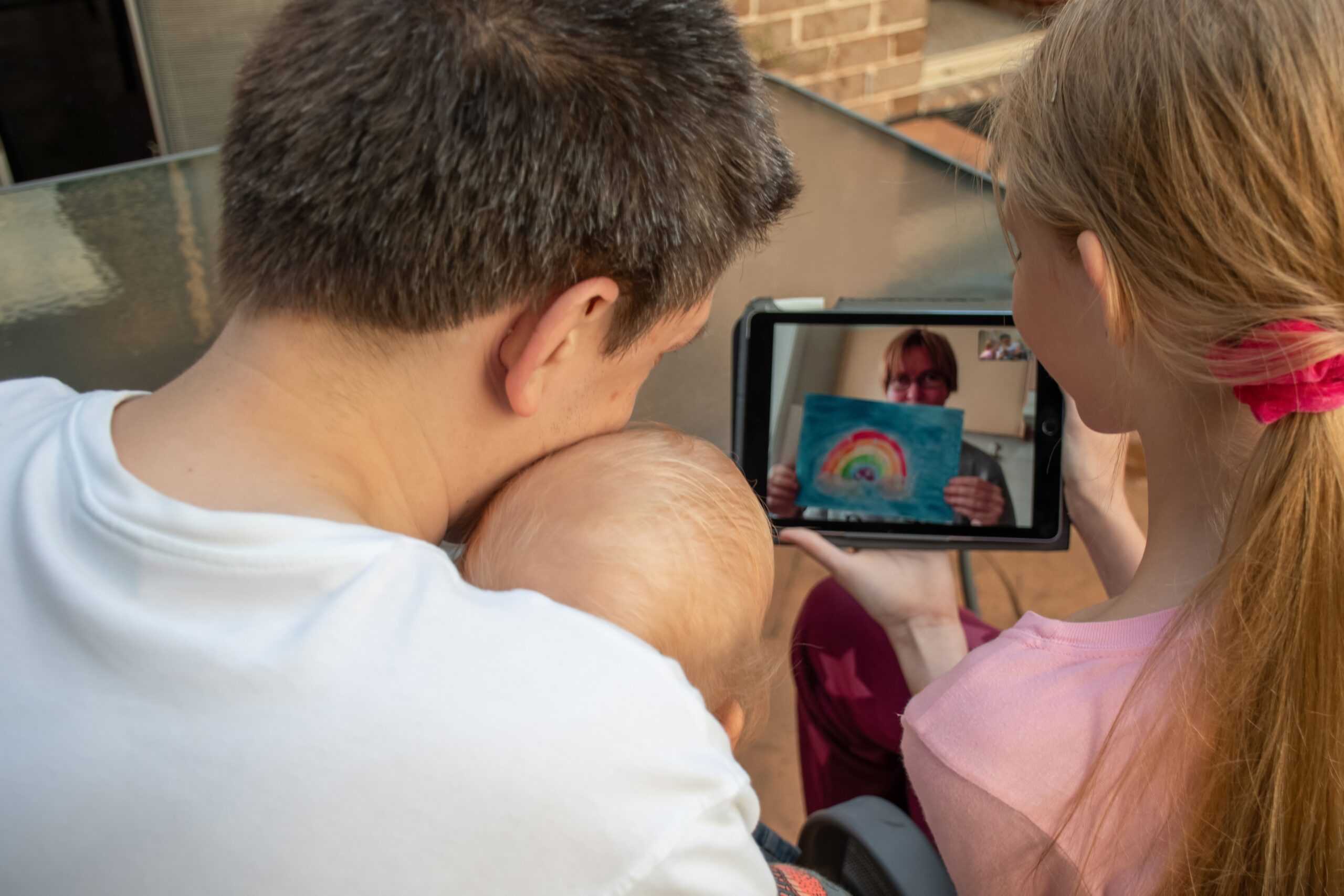
For the parent at home
The at-home caregiver plays a central role in maintaining emotional stability within the family system. During periods of separation, children often depend on this parent for day-to-day regulation, safety, and predictability.
From an attachment and family systems perspective, a child’s emotional stability is closely linked to the caregiver’s own capacity for regulation. For this reason, self-care is not optional—it is foundational. When the at-home parent is emotionally depleted, it becomes harder to respond with patience, consistency, and reflective attunement. Small, intentional forms of self-care and support therefore directly strengthen the child’s sense of safety.
– Provide a clear narrative
Children cope better with simple, consistent explanations:
“They are away for work and they love you very much.”
Clarity reduces anxiety and uncertainty.
– Protect the relationship with the absent parent
Support the child’s bond with both parents by:
- encouraging contact
- speaking respectfully about the other parent
- allowing emotional expression without correction
Children should not carry loyalty conflict.
– Maintain structure and routine
Predictable routines provide emotional grounding during separation.
– Validate emotional responses
Sadness, anger, or regression are often attachment-based responses. Calm acknowledgement (“I know you miss them”) supports regulation more effectively than correction.

For both parents: staying emotionally aligned
Even when physically separated, parents remain part of the same emotional system for the child.
– Maintain consistency where possible
Aligned messages, routines, and expectations help children feel secure.
– Avoid placing children in the middle
Children should not be messengers or emotional intermediaries. This reduces psychological burden and protects emotional development.
– Prioritise repair
Misattunements will happen. What matters most is repair:
“I missed our call—I was thinking about you.”
“I’m here now, and I’m glad we’re talking.”
Repair strengthens attachment and emotional trust.

A final reflection
Distance does not automatically weaken attachment. What impacts connection most is not geography, but emotional availability, predictability, and relational safety.
Children do not require constant physical presence to feel loved. They require the experience of being:
- held in mind
- held in routine
- and held in emotional connection
Similarly, parents do not need perfection to maintain strong relationships with their children. They need intention, consistency, and emotional presence in the ways that are possible.
From a family systems perspective, connection is not defined by proximity alone—it is defined by the quality of emotional continuity within the relationship.
Even across distance, families can remain deeply connected when the relationship is actively maintained, emotionally attuned, and meaningfully supported.

Charlene
Clinical Psychologist and Family TherapistAccredited clinical and psychotherapy supervisor