
The arrival of a baby is often imagined long before it happens. Parents may picture the first cuddle, introducing their baby to family, bringing them home, and slowly finding their feet together.
But sometimes, the beginning looks very different.
Recently, a family member gave birth prematurely, and their baby needed to be admitted to the Neonatal Paediatric Intensive Care Unit (NPICU). The Neonatal Paediatric Intensive Care Unit (NPICU) is a specialised hospital unit that provides intensive medical care and monitoring for newborn babies who are premature, unwell, or need additional support after birth.Watching a family I care about navigate this experience prompted me to reflect more deeply, both personally and professionally, on what parents may go through when the beginning of parenthood takes an unexpected turn.
For families experiencing neonatal care, enormous love and joy can exist alongside fear, uncertainty, exhaustion and grief for the beginning they had imagined. Raising awareness of this experience matters, not only so that parents feel less alone, but also so that those around them can better understand how to support them.

When Becoming a Parent Also Means Becoming an NPICU Parent
Walking into a neonatal unit for the first time can feel overwhelming. Instead of simply holding and getting to know your newborn, you may suddenly find yourself surrounded by monitors, incubators, medical terminology and conversations about your baby’s health.
Parents may experience many different, and sometimes contradictory, emotions: love, joy, fear, sadness, helplessness, anger, gratitude, guilt and hope. Some may feel as though life has suddenly narrowed to the next medical update, test result or small milestone.
There can also be grief for what didn’t happen: the final weeks of pregnancy, the birth experience you hoped for, immediate skin-to-skin contact, feeding your baby as you had imagined, introducing them to siblings or grandparents, or simply taking your baby home.
These losses can be difficult for others to recognise because, understandably, everyone’s attention is focused on the baby’s health. Yet the emotional experience of the parents matters too.
Research consistently shows that having a baby admitted to neonatal intensive care can place considerable strain on parental wellbeing. Anxiety, low mood and symptoms associated with traumatic stress can occur, particularly following a frightening or unexpected birth, uncertainty about a baby’s health, and separation from the baby.
Understanding this is important because psychological support for parents should not be viewed as an optional extra. Supporting parents is also part of supporting the family surrounding the baby.
“But I Should Be Grateful My Baby Is Getting the Care They Need…”
You can be deeply grateful for the professionals caring for your baby and still wish desperately that your baby did not need to be there.
Both things can be true.
You can feel hopeful in the morning and frightened by the afternoon.
You can celebrate a tiny weight gain while grieving the newborn experience you expected.
You can feel enormous love for your baby while also feeling disconnected, numb or unsure of yourself as a parent.
And you may experience guilt, wondering whether you did something wrong, whether your body somehow let your baby down, or whether you should be “coping better”.
Difficult feelings are not a measure of how much you love your baby. They are understandable responses to an extraordinarily demanding situation.
There is no correct way to feel your way through an NPICU experience.
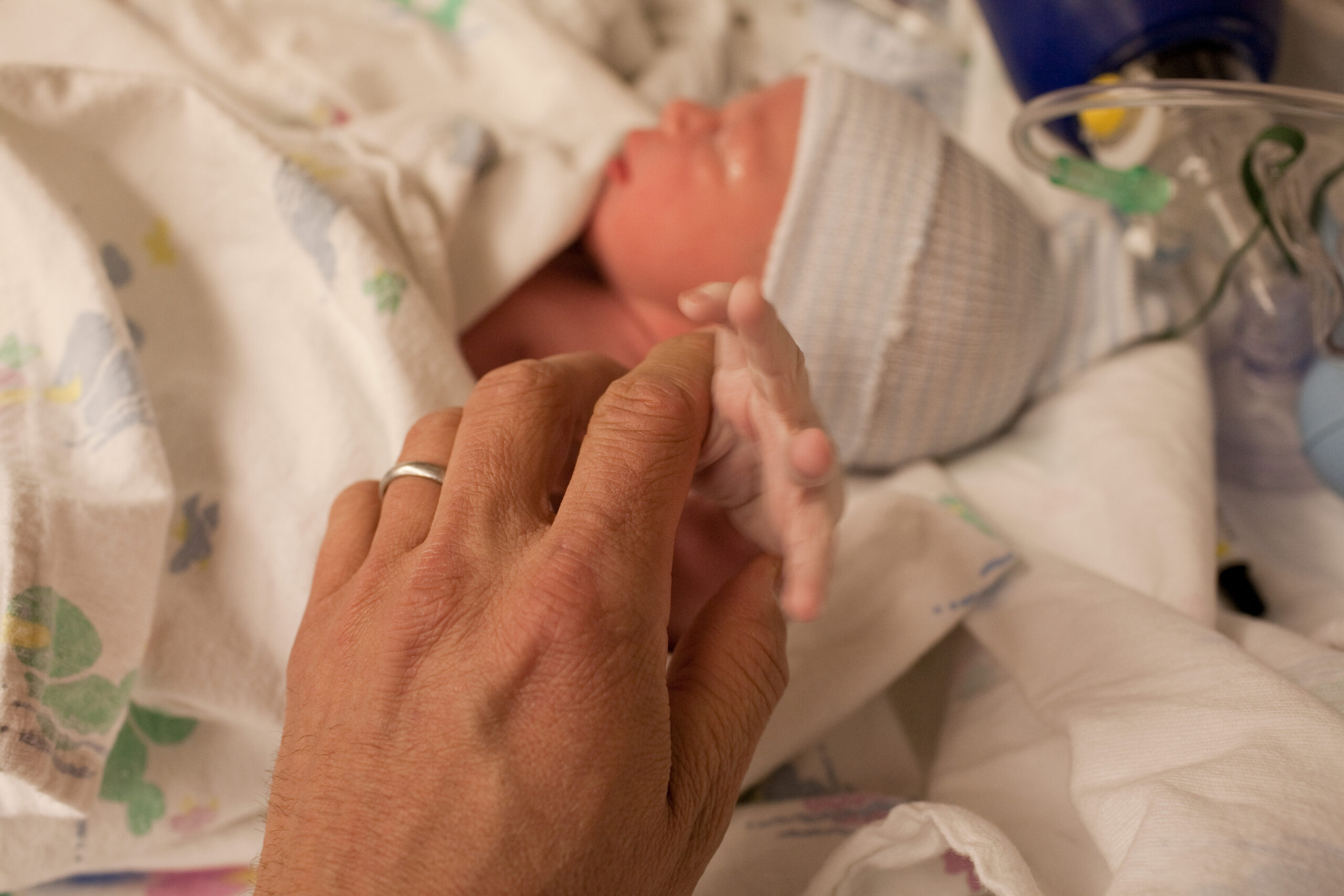
Finding Your Place as Your Baby’s Parent
One of the particularly difficult aspects of neonatal care can be the feeling that everyone else knows how to care for your baby better than you do.
Medical professionals may need to carry out many aspects of your baby’s care, and this can sometimes leave parents feeling like observers rather than parents.
Yet you remain your baby’s parent.
Where medically appropriate, ask the neonatal team how you can be involved. Depending on your baby’s needs and stage of care, this might include skin-to-skin contact, feeding, changing a nappy, helping with bathing or comforting routines, or simply being close.
When holding your baby is not yet possible, connection can still happen. You might talk or sing quietly, read a story, sit beside the incubator, or ask staff to show you how you can safely offer your touch.
And importantly, bonding does not depend on one perfect moment immediately after birth.
Relationships are built through many small moments, repeated over time.
If you do not immediately feel the intense connection you expected, this does not mean that something is wrong with your relationship. You and your baby are getting to know one another in circumstances neither of you expected.
Give that relationship time.

Caring for Yourself While Your Baby Is in NPICU
When your baby is unwell, advice to “look after yourself” can almost feel impossible. Parents may feel guilty leaving the hospital, sleeping, eating a proper meal or even experiencing a moment of enjoyment.
Self-care during an NPICU admission does not need to look impressive.
It might simply mean:
- eating regularly and drinking enough water;
- stepping outside for ten minutes;
- sleeping when an opportunity arises;
- accepting a meal someone has prepared;
- allowing someone else to care for your older children for a few hours;
- writing down questions before speaking with the medical team;
- keeping a diary of your baby’s journey if this feels meaningful;
- speaking honestly to someone you trust;
- taking a break from messages and medical updates when you need one.
Parents are also allowed to ask questions more than once.
When we are frightened, exhausted or overwhelmed, our ability to absorb complicated information can be affected. You do not need to remember everything the first time it is explained.
Ask the team to slow down, clarify unfamiliar language or repeat information when you need them to.

Let People Help, But Tell Them What Help Looks Like
Friends and relatives often genuinely want to help but do not know what to say or do.
Sometimes the most useful support is not another message asking, “Any news?” It is someone quietly removing one small burden from an already overwhelmed family.
Rather than trying to manage everything yourself, consider allowing trusted people to help with practical things: meals, shopping, laundry, school runs, pets or caring for older children.
You might also nominate one family member or friend to communicate updates to others. Repeating the same medical information many times can become emotionally exhausting.
And it is perfectly reasonable to say:
“We really appreciate everyone thinking of us. We don’t always have updates, and sometimes we don’t have the energy to reply. We’ll share news when we can.”
Setting boundaries does not mean you are ungrateful. Sometimes boundaries are exactly what a family needs in order to protect the limited emotional energy they have.
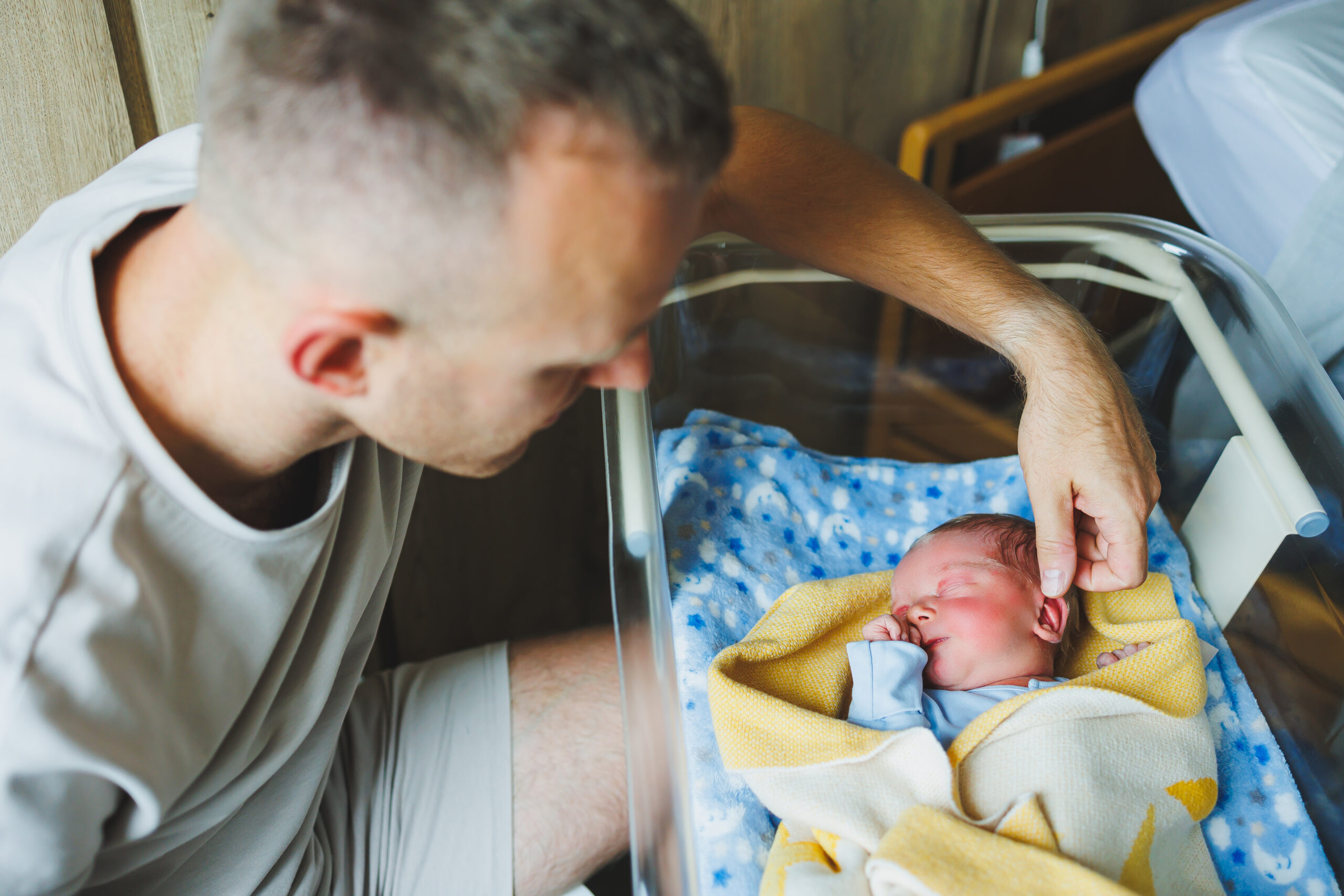
Remember the Other Parent, Too
Mothers understandably receive considerable attention following birth, particularly when they are recovering physically themselves. But fathers and partners can also experience significant distress.
They may be trying to support the mother, understand medical information, communicate with relatives, look after older children, manage work and practical responsibilities, and cope with their own fear about the baby.
Sometimes the partner becomes “the strong one” and their own distress becomes almost invisible.
Partners may also cope differently. One may want to talk repeatedly about what is happening, while the other becomes quieter or focuses on practical tasks. Different coping styles do not necessarily mean that one person cares more or is less affected.
Try asking each other:
“How are you doing today?”
“What do you need from me right now?”
“Do you want me to listen, or would you like us to think about what we can do?”
There may not always be a solution. Sometimes feeling heard is enough.

When It May Be Time to Ask for More Support
There is no expectation that parents should simply be able to “handle” an experience like this.
Fear, sadness and anxiety are understandable. But if these feelings become persistent or overwhelming, additional support can help.
Speak to a healthcare professional if you are experiencing ongoing panic, hopelessness, intrusive memories, nightmares, feeling constantly on alert, withdrawing from others, or finding it increasingly difficult to function. You may also find that the emotional impact becomes clearer later, including after your baby comes home.
Ask the neonatal team what psychological, perinatal mental health, counselling or peer support is available to you.
Connecting with another parent who has experienced neonatal care can also provide something different from professional support—the relief of speaking with somebody who simply understands.
Asking for psychological support does not mean you are failing to cope. Sometimes it is part of coping.

For Family and Friends: How Can You Help?
When someone you love has a baby in NPICU, you may worry about saying the wrong thing. You do not need to have the perfect words.
Often, what matters most is being consistently and sensitively present.
Offer something specific.
Rather than saying, “Let me know if you need anything,” try: “I’m making dinner on Tuesday. Can I leave some for you?” or “I can collect the children from school tomorrow if that would help.” When people are overwhelmed, even identifying what help they need can feel like another responsibility.
Follow the parents’ lead.
Some parents will want to talk; others will not. Some may welcome visitors, while others need privacy. Their needs may change from one day to another.
Avoid repeatedly asking for updates.
There may be no new information, or parents may simply not want to repeat difficult medical details throughout the day.
Remember that this is their baby, not simply a medical situation.
Use the baby’s name. Ask about them. Acknowledge and celebrate the milestones the parents choose to share, however small they may seem to somebody outside the neonatal world.
Be careful with reassurance.
Statements such as “Everything happens for a reason,” “At least…” or “I’m sure everything will be fine” are usually offered with kindness, but they can unintentionally minimise what a family is experiencing.
You do not have to remove someone’s fear in order to support them.
Sometimes:
“This sounds incredibly difficult. I’m here.”
is more powerful than trying to find the positive side.
Remember both parents.
Ask the partner how they are coping too. They may be carrying much more than is immediately visible.
Keep checking in.
Support often pours in immediately after a baby is born, but neonatal journeys may last weeks or months. And going home does not necessarily mean the emotional experience ends. A thoughtful message several weeks later can mean just as much as one sent at the beginning.

Taking It One Day at a Time
An NPICU journey can contain milestones that people outside it may never fully appreciate.
A first cuddle.
A little more milk.
A small weight gain.
A tube being removed.
Changing your baby’s nappy yourself.
Hearing that your baby is ready for the next stage of care.
And eventually, for many families, the long-awaited journey home.
There may be difficult days among hopeful ones, and progress may not always follow the straight line you desperately want it to.
You do not need to manage the entire journey today.
Sometimes the task is simply to get through this day, this update, this moment.
And perhaps one of the most important messages for parents to hold onto is this:
Your baby’s admission to neonatal care may have changed how you imagined the beginning of parenthood, but it has not taken away your place as their parent.
Your presence matters.
Your voice matters.
Your relationship with your baby is already being built.
You can be hopeful and frightened.
Grateful and grieving.
Strong one day and overwhelmed the next.
There is room for all of it.
And you do not have to carry the emotional weight of this experience alone

Charlene
Clinical Psychologist and Family TherapistAccredited clinical and psychotherapy supervisor